

By Mike McKenna
 The latest study by the U.S. Bureau of Economic Analysis (BEA) says it loud and clear: Outdoor recreation is big business in the United States. And business has been booming.
For the eighth consecutive year, the BEA is reporting growth in the nation’s outdoor recreation economy. Its 2024 report was recently released and shows that the outdoor industry grew by 2.7%, adding $696.7 billion to the country’s Gross Domestic Product (GDP).
Every state in the country showed growth in this sector. Idaho came in seventh for Outdoor Recreation Added Value, accounting for 3.5% of the state’s GDP. Hawaii leads the country at 6.1 of GDP, while Alaska, Montana, Wyoming and Maine round out the top five.
Every aspect of outdoor recreation saw growth in the latest study, except for staffing, which was flat. Wages saw the biggest jump.
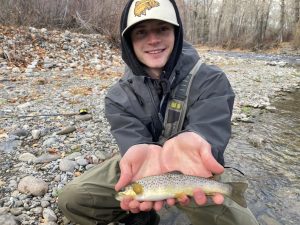
In 2024, Boating/Fishing were the largest sectors, adding $38.4 billion to the U.S. economy. RVing was second at $27.5 billion. Next on the list were Shooting/Hunting/Trapping at $16.5 billion, Motorcycling/ATVing at about $11 billion, and Snowsports at $7.6 billion.
Accommodations/Entertainment/Food provide the biggest impact, at 25%, while Retail Goods also make up nearly a quarter of the monies spent.
One of the big reasons outdoor recreation is booming is because Americans are really beginning to embrace all of its benefits. According to numerous studies, like one from Oregon State University (OSU), there are a plethora of benefits for spending time outdoors.
Enjoying just about any type of outdoor recreation—from walking/hiking and sightseeing to skiing or rock climbing—has been proven to: reduce stress, improve your mood, improve sleep, improve overall health, and even boost self-esteem.
The OSU study found that the loss of access to outdoor recreation during the COVID-19 crisis created massive mental health issues throughout the country. It even goes on to suggest that communities prepare for any future challenge by following the “3-30-300 Rule.” This rule advises that every dwelling in your community has at least three visible trees, a 30% tree-covered canopy for every neighborhood, and public greenspace within 300 meters or less away from every unit.
As the study states, “Our research shows that outdoor recreation isn’t some kind of bonus, it’s a public health necessity.”
Since so many communities in Idaho fit into the 3-30-300 Rule, it’s little wonder why the recent boom in outdoor recreation has dovetailed with an increase of people moving to the Gem State. Idaho’s population has grown by nearly 10% since 2020.
All this means is that there’s plenty of money to be made locally thanks to our easy access to world-class outdoor recreation. It also means it’s part of our job as locals is to be good stewards and protectors of the land. We need to do our part and help spread the word that, as the old Gem State slogan goes, “Idaho is too great to litter.”
It also means we should live by the age-old Idaho mantra of “Leave No Trace.”