

By Fran Jewell
Several years ago, I had a heart attack. At that time I had five German shepherds. Three of them were very big boys that would defend my house to the end if someone came through the door in the middle of the night and I had not opened the door. I had often thought about what I would do in an emergency and I had to call 911/EMS since I lived by myself. What I did at 1 a.m. was I told them all to go in their crates (I call it “night-night”). They all promptly went into their crates and I at least had the ability to close their crate doors and go out on the front porch. The police were the first to arrive two minutes after I called. Imagine what might have happened had my dogs been loose in the house and two officers came to my door? One of the reasons I wanted them in their crates was not just so EMS/police were safe, but I had no idea who would be there in the morning to take care of them and if they could get in without me there. I was the key to my German shepherds letting someone in the house. They have been trained to be delightful when I open the door. Otherwise, they might not have been so delightful. I do have German shepherds for this very reason. And, for me, I did not worry about their safety regardless of what happened to me that night.
As you can see, this was probably a matter of life and death for my dogs and, ultimately, for me.
Recently, another situation came to be between two of my clients. One is quite elderly. She has a lovely small dog that goes with her everywhere. As fate would have it, my client had to have surgery. Her pup went to stay with a dear friend of hers. The unfortunate thing was that her pup was not prepared to spend a night with someone else, even though the friend was no stranger. The pup had extreme separation anxiety and made the night incredibly difficult for everyone. The dog was extremely stressed and so was the friend trying to figure out how to comfort the dog. Nobody did well.
What would the solution have been? If the elderly woman had continued to use a crate for her mid-aged pup, even off and on routinely, the crate would have meant comfort and familiarity to the dog. The separation anxiety could have been dramatically reduced had the crate gone along to the friend’s house for the night. Instead, the night was brutal for everyone.
So many people stop using a crate when their dog has grown up. What they do not consider is extenuating circumstances. Do you live alone when no one can care for your dog in an emergency? What happens when your dog must stay overnight with the vet for emergency care? At the vet, your dog is kept in confinement. If your dog is not comfortable with confinement, here we are again with huge stress for everyone—not only the dog but the staff at the veterinary hospital.
What happens if your dog gets lost and is taken to a shelter, having been rescued until you can get your pup? Again, your pup is kept in confinement and exposed to extreme stress and anxiety if he/she is not accustomed to a crate or confinement.
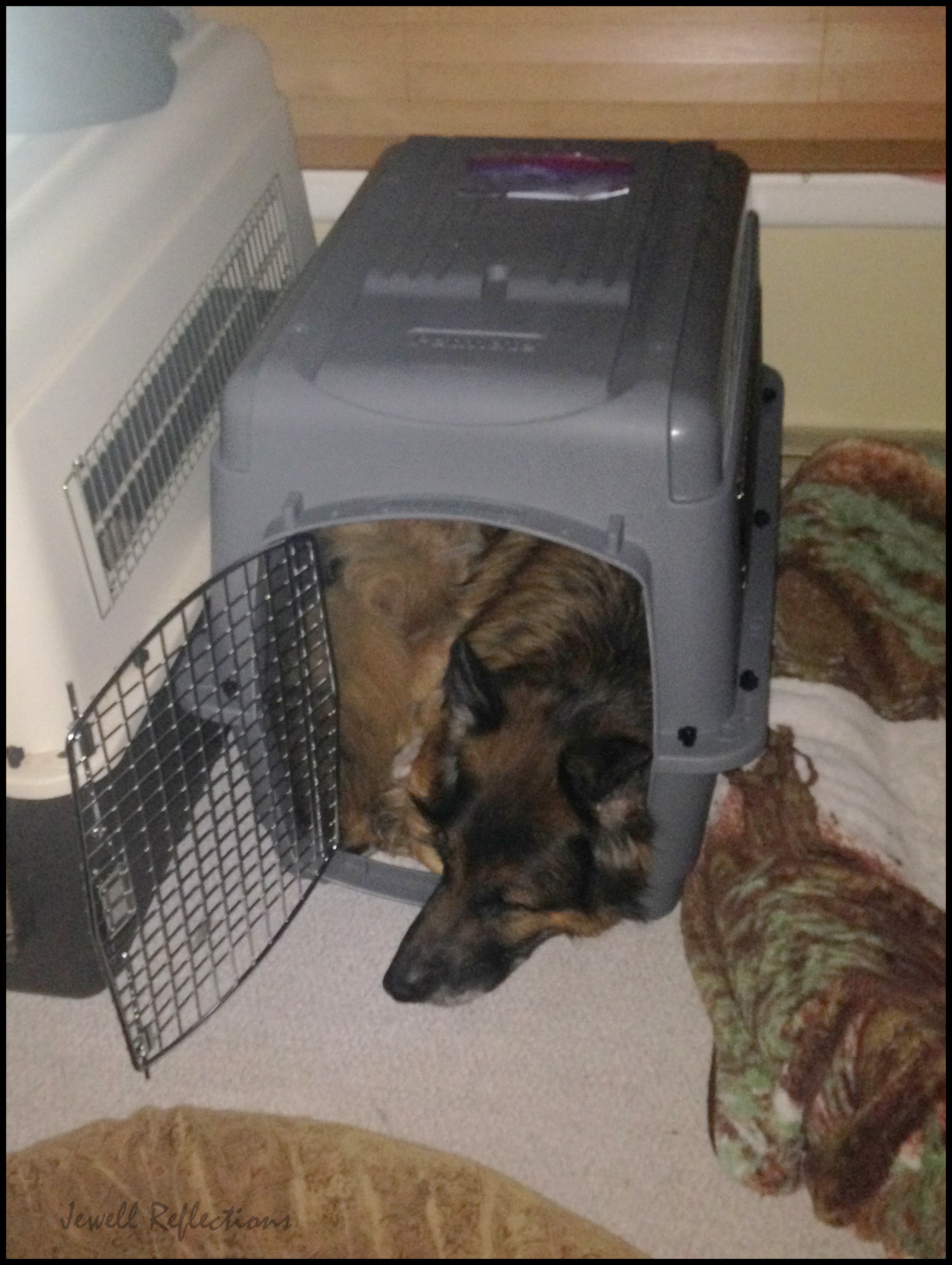
It is only fair and in the best interest of your pup for you to teach and continue the routine use of a crate throughout his/her life. That doesn’t mean your dog must be in a crate every day. It means just keeping it a skill so a crate and confinement is comfortable and enjoyable. My dogs will just go into a crate to take a nap!
Crate training is not cruel. Dogs are still 99% genetically the same as wolves—yes, even a Chihuahua! One of the things we need to understand is that dogs are denning animals. They enjoy and feel safe in a crate that was well trained. It provides them with so much safety and comfort. Dogs can feel very secure in a crate. If my dogs had not been comfortable in a crate that horrible night of my heart attack, I shudder to think what might have happened. If the little guy belonging to the elderly client above had been crate trained, so much stress and anxiety could have been prevented.
One of the things that will help your dog most is to always think ahead. “If I don’t do something, what will that mean down the road?” Crate training is one of those things many of us just don’t think about and how it applies in an emergency, if we live alone, if we are elderly, and so on. We just don’t know what life will hand us. Crate training and maintaining that skill is something that can greatly help the ups and downs of life!
Fran Jewell is a dog behavior consultant, NADOI-certified instructor and vice president. She owns Positive Puppy Dog Training LLC and can be reached at (208) 721-7221.