

BY Sophia Sturgeon
Each year, several ranchers from our region lead their sheep north into the mountains for the summer months, and back south for the fall. Over 1,000 sheep shuffle through the streets, trails, and canyons of Blaine County. While these sheep are impressive in their own right, there is a group of underdogs—literally—that are often overlooked.
Five to ten livestock guardian dogs (LGD) accompany ranchers over the summer months, as they guide the sheep through the many canyons of Blaine County: Galena, Lake Creek, Hyndman, and Corral Creek. Unlike herding dogs, which gather, control, and move the livestock, LGD are used to protect the sheep; they are born and bred to patrol the perimeter and sound the alarm when the livestock is in danger of a predator. As puppies, guardian dogs are immersed with livestock 24/7, and trained not to chase, harass, or play with them. It is widely believed that the most efficient guardian dogs are bonded with their stock; that way, they aren’t just guarding property, they are true livestock guardian dogs.
You might think that dogs that provide this kind of protection would be considered irreplaceable or held in high esteem, but the treatment they receive does not align with these beliefs. What many people may not know is that these dogs are frequently mistreated by their ranchers.
In fact, it is during the period in October, when the sheep are led back down south, that these dogs receive the worst treatment. When all the sheep bands leave the canyons and head south towards their respective ranches, many of the dogs, who have worked tirelessly all summer, are emaciated and exhausted; thus, they are unable to continue. Instead of receiving care, they are simply left behind. Not only are the LGD abandoned, but this period also witnesses many litters of puppies left in the dust. Many females are not spayed, resulting in pregnancy; when they eventually go off to give birth, the band of sheep keeps on trekking, leaving the females and their puppies alone to die.
In Idaho Code Title 25-3504A, livestock guardian dogs are slyly excluded from protection against animal cruelty. The chapter begins by laying out definitions, one of which is “Companion Animal,” defined as “those animals solely kept as pets and not used as production animals, as defined in this section, including, but not limited to, domestic dogs, domestic cats, rabbits, companion birds, and other animals.” Title 25-3504A describes the repercussions associated with “Torturing Companion Animals,” stating, “A person is guilty of the offense of torturing a companion animal if he tortures a companion animal as defined in this chapter.”
As defined in this chapter, tells us everything we need to know; companion animals are “defined in this chapter” as domesticated animals that are “not used as production animals.” Livestock guardian dogs are production animals, which means they are not exempt from mistreatment.
The mistreatment they’re referring to? “The intentional and malicious infliction of pain, physical suffering, injury, or death upon an animal, maliciously maiming, wounding, tormenting, depriving of necessary sustenance, drink, or shelter, cruelly beating, or mutilating an animal, and knowingly abandoning an animal.” Under Idaho law, all of these forms of mistreatment are fair game for livestock guardian dogs.
So, what can we do about this horrific reality?
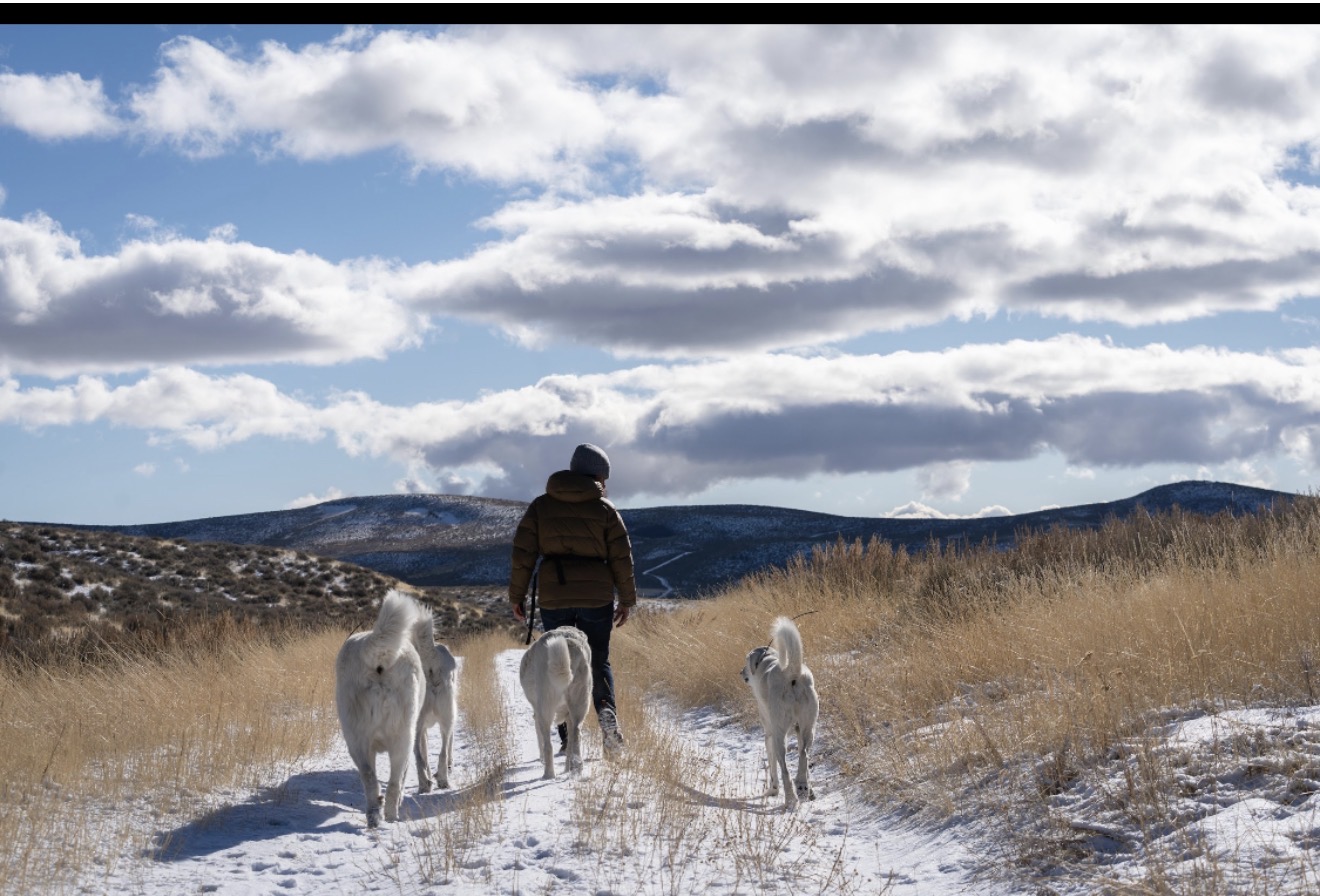
Enter Tiffany Larson and her team at Unega Mountain Dog Rescue. Larson and her team have been rescuing large livestock guardian dogs for 10 years; her “pack” is made up primarily of Great Pyrenees and Akbash. Her crew is dedicated to collecting LGD across south-central Idaho that are hurt, left behind, or simply lost from their bands. Unega provides these dogs with medical care, socialization, and eventually helps them find loving homes. Their mission is not only rescuing abandoned pups but also to work alongside sheep companies to advocate for better treatment of LGD.
When asked to provide a basic overview of what her team is trying to accomplish regarding the Idaho Livestock Guardian Dog Law, Larson explained that since the early 1960s, the Idaho Legislature has listed LGD as “protection animals”, which is just a fancy way of saying they list them as livestock; meaning that, in the state of Idaho, these dogs have no rights. By this logic, ranchers can do whatever they want to them; they have every right to shoot them at will, abandon them, and leave them for dead. And these aren’t just hypotheticals; these dogs, who accompany and protect their bands of sheep for miles, who perform a thankless job, who receive no love for their efforts, do get left behind. As Tiffany puts it, “The [dogs] we find are going to be the lucky ones, and the [dogs] we don’t find, sadly, are going to die alone.”
Tiffany tried to work alongside ranchers at first. She came up with several solutions and presented them directly. She offered to spay and neuter the dogs to prevent unwanted puppies from being left for dead in the middle of nowhere. She offered to vaccinate and even deworm the dogs so they’re not skinny and full of parasites while working. She offered to provide ranchers with Garmin inReach handheld satellite communicators so they can call Tiffany or drop a pin of their location; that way, if a dog is injured and being left behind, Tiffany and her team can go find the dog.
Additionally, all of the solutions Tiffany provided were offered at no cost to the ranchers; everything would be handled by Unega. While many of the ranchers she spoke to greeted her ideas with open arms, and even a certain level of enthusiasm, none of them ever followed up; this lack of communication on the ranchers’ end showed Tiffany everything she needed to know: they did not want her help, they wanted her to stay out of their business—if a better life was what Tiffany wanted for these dogs, she was going to make it happen on her own.
Tiffany’s proposals to the ranchers made some headway, but nothing significant. She followed this route for about two years, bearing witness to many devastating cases. However, it took a certain dog, a certain case, for Tiffany to realize that enough was enough. Phoenix, a Great Pyrenees that Unega rescued, was the catalyst in Tiffany deciding she was “done playing nice.” Tiffany didn’t dive too deeply into Phoenix’s condition when she found him, but she didn’t need to—her reserve spoke volumes. The dog’s condition was so severe that it necessitated a change. This is why Tiffany began drafting a bill to address Idaho’s current legislative approach to animal cruelty. The bill will be called The Working Livestock Guardian Dog Protection Act, AKA Phoenix’s Law.
Larson explained that her goal with the bill is to hold ranchers accountable. “If these dogs protect [ranchers] livelihood, then [ranchers] need to protect theirs.” Larson isn’t trying to take these dogs away from their jobs; she recognizes that guarding is what they were bred to do. However, an issue arises with her when these dogs are abandoned, mistreated, or left to die alone. To Larson, accountability looks like ranchers reaching out to her if they are leaving a dog behind; it also looks like vaccinating their dogs and spaying their females, unless they have intentional plans to breed and care for the puppies.
Tiffany’s hard work and dedication to these dogs is monumental; however, her team can’t do everything. It is up to ordinary people, like you and me, to support their cause and keep the mission alive. All of Unega’s rescues transpire through word of mouth, so when you’re out biking, hiking, or driving through back roads, please keep them in mind if you spot any dogs who could use rescuing. You can also visit their website, www.unegamountaindogrescue.org, to reach out to Tiffany directly by phone or email, foster any of the rescue pups, or donate to the cause. You can also donate via PayPal or Venmo to @unega-mountain-dog-rescue.
What would you do for the animals you love; why are these dogs any different?